A hospital visit can be stressful for anyone. For people with disability, it can be even more challenging if doctors and nurses don’t know how they communicate, their support needs, or what helps them feel safe and comfortable.
Imagine arriving at an emergency department where healthcare staff are meeting you for the first time. There may not be enough time to explain your communication preferences, medical history, or daily support needs. This is where Julian’s Key Health Passport can make a real difference.
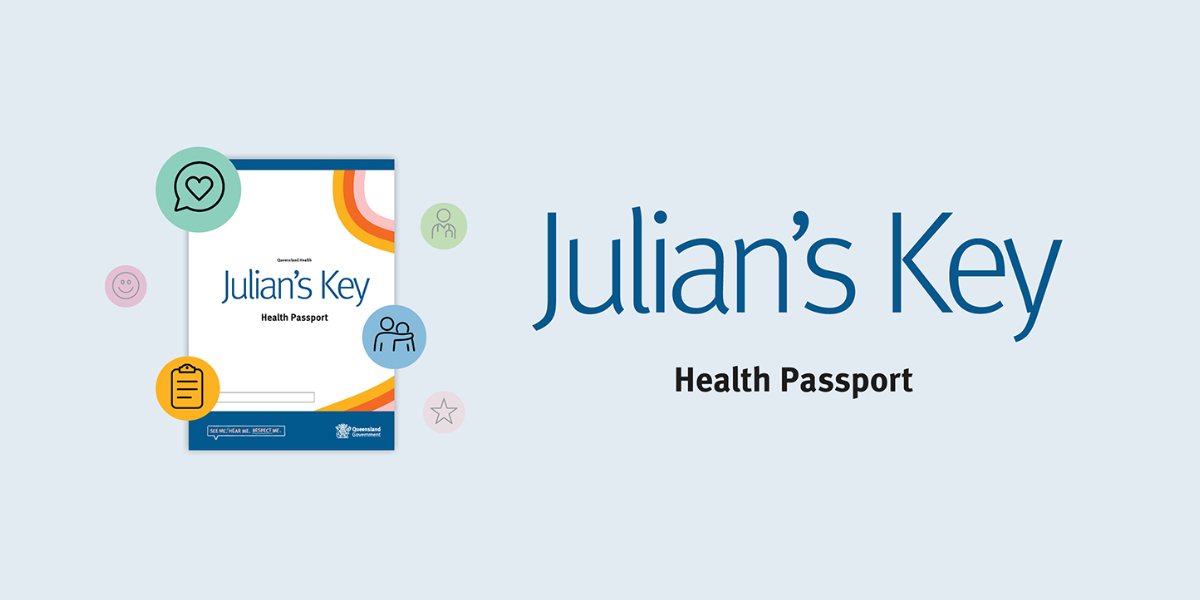
Developed by Queensland Health, Julian’s Key Health Passport is a practical communication tool that helps people with disability share important information with healthcare professionals, making hospital visits safer, more personalised, and less stressful.
What Is Julian’s Key Health Passport?
Julian’s Key Health Passport is a free document created by Queensland Health to improve healthcare communication between people with disability and healthcare professionals.
It was developed in memory of Julian Klass, whose experiences highlighted the importance of ensuring healthcare providers understand a person’s individual needs.
According to Queensland Health – Julian’s Key Health Passport, the Health Passport is designed to help doctors, nurses, paramedics, and other healthcare professionals quickly access essential information that supports safe and person-centred care.
Rather than replacing medical records, it complements them by providing practical information that may not always appear in clinical notes.
Why Communication Matters in Healthcare
Good communication is essential for safe healthcare.
For some people with disability, communicating pain, symptoms, preferences, or support needs may be difficult, particularly during emergencies or unfamiliar hospital visits.
Without clear information, healthcare professionals may:
- misunderstand communication styles
- overlook individual support needs
- struggle to provide personalised care
- experience delays in decision-making
Improving healthcare communication helps reduce these risks and creates a better experience for both patients and healthcare teams.
Person-centred care starts with understanding the individual—not just their medical condition.
What Information Should Be Included?
One of the strengths of Julian’s Key Health Passport is that it focuses on information healthcare staff need immediately.
The passport may include:
- preferred communication methods
- medical conditions
- medications and allergies
- daily support needs
- mobility information
- sensory preferences
- emergency contacts
- important routines or behaviours
- people involved in the person’s care
Because the document belongs to the individual, it can be updated whenever circumstances change.
Keeping information current helps ensure healthcare professionals have accurate details when they are needed most.
How Julian’s Key Health Passport Supports Safer Care
Providing clear information early helps healthcare professionals make informed decisions.
According to Queensland Health, Julian’s Key Health Passport supports hospital care for people with disability by improving communication, reducing misunderstandings, and promoting safer, more individualised healthcare.
The Health Passport can help healthcare teams:
- understand how a person communicates
- recognise important health information quickly
- provide more personalised support
- involve families and carers appropriately
- improve continuity of care across different health services
This reflects the principles of person-centred healthcare, where every person’s preferences, needs, and goals are respected throughout their healthcare journey.
Who Should Have One?
Julian’s Key Health Passport can benefit many people living with disability, particularly those who:
- have communication differences
- receive regular hospital treatment
- live with complex health conditions
- attend emergency departments
- receive ongoing disability health support
Families, carers, support workers, and NDIS providers can also help participants complete and regularly update their Health Passport to ensure the information remains accurate.
Preparing before a medical appointment or emergency can reduce stress and improve the overall healthcare experience.
Better Communication Leads to Better Healthcare
Every healthcare professional wants to provide safe, effective care. Having the right information at the right time makes that easier.
At Lotus Disability Care, we believe that empowering participants with practical tools such as Julian’s Key Health Passport supports better communication, greater confidence, and safer healthcare experiences. By encouraging clear information sharing and person-centred planning, participants and families can feel more prepared whenever healthcare is needed.